
The 5–9 Creator Guide: How I Grew a 6-Figure Side Hustle in a Year
how i started, what i learned, and how i'd do it again

One year ago, I started an Instagram account because I wanted to test a few side hustle ideas and “build distribution".
On October 18, 2024, my Instagram account had 235 followers.
Two weeks after that, I grew the account to 1,259 followers.
About a month later, I (went viral and) grew to 50,000 followers. Pics for proof!
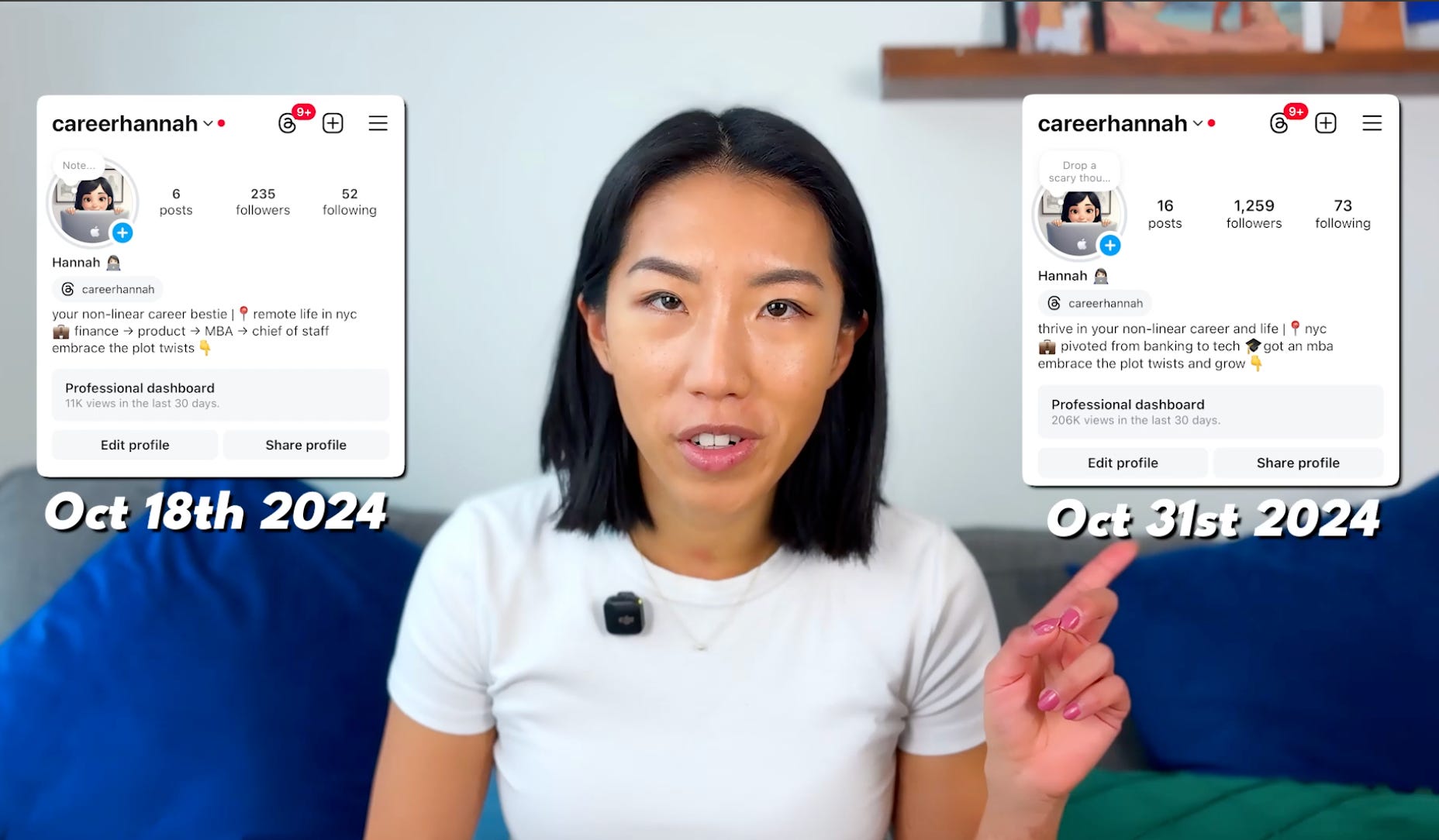
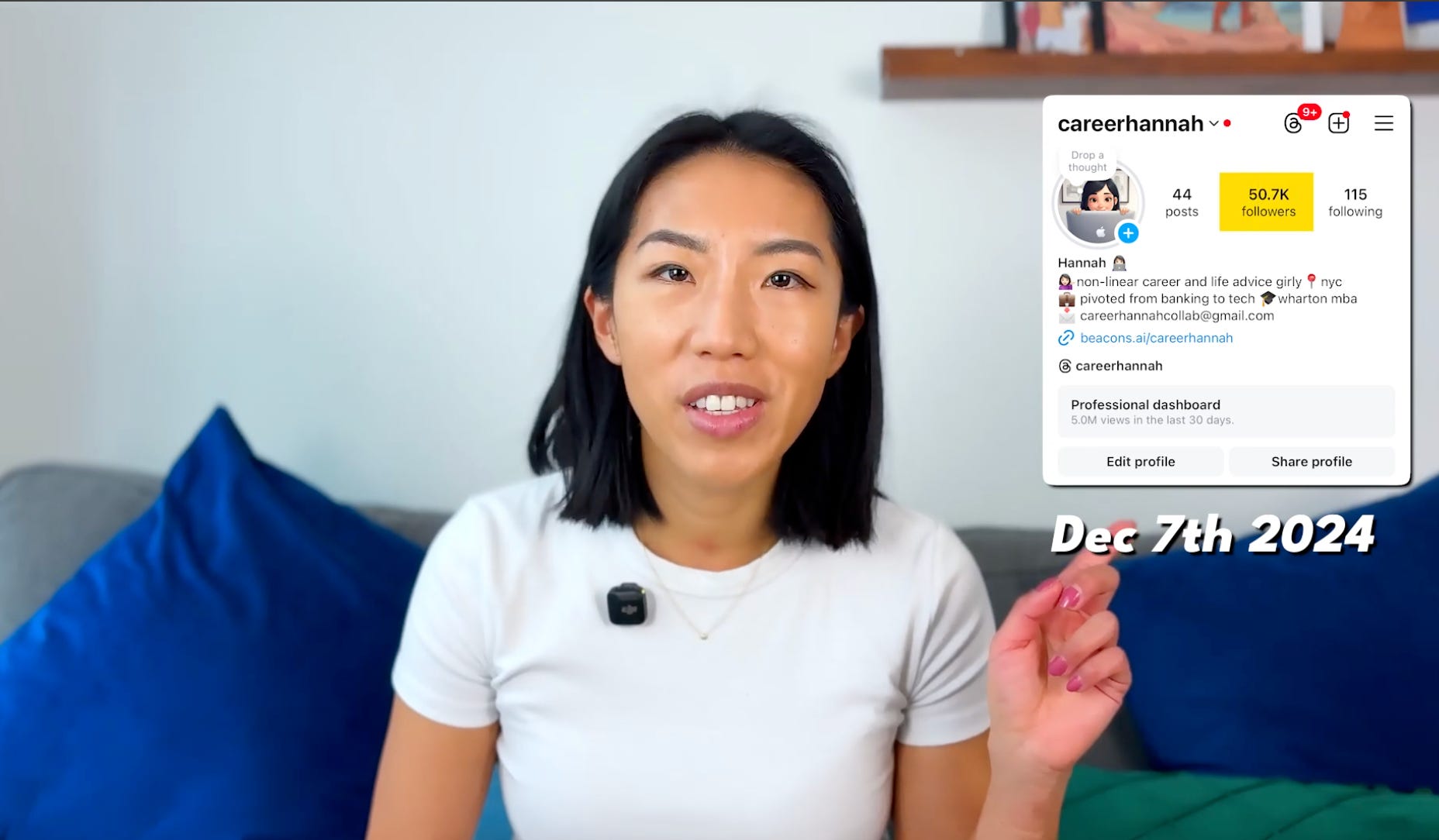
Now, I have over 130,000 followers on several platforms. I’ve made six figures from my content business and helped thousands of people grow their careers, while working 9-5. I got several job offers from posting on Linkedin.
It wasn’t fast, linear, or easy. There were months when nothing grew, when I thought my first viral post was beginner’s luck, when I felt like I was on a hamster wheel chasing engagement instead of building something real.
But over time, it became a business that didn’t depend on follower count or viral views — one rooted in community, systems, and value that compounds. And one that complemented, rather than conflicted with, my full-time tech job.
Everyone’s version of building a business looks different, but here’s exactly how I started, what I learned, and how I’d approach it now.
What does this have to do with careers?
Most of what I write here is about full-time careers — job postings, breaking into startups, navigating pivots, and building meaningful work. This story is part of that.
I’m sharing it because I see my content business as part of my own career, not separate from it. Many of you ask about financial freedom, professional growth, and how to build a personal brand that compounds over time. More and more of you — the same people applying to the jobs I feature each week — are also asking about side hustles and solopreneurship.
So it’s only fair I show you what that really looks like, beyond my full-time role. This isn’t about making viral videos or chasing followers. It’s about building a content-led business that can scale sustainably, using the same principles that apply to any career: testing, iterating, and creating real value.
Part 1: How I Started
It’s always hardest to start, and people rarely tell you how they started from ZERO, so I hope this detailed breakdown helps!
The early days (summer 2024)
I had just graduated from business school and started my full-time job in tech, which I liked. I had good coworkers, stable hours, and decent pay. After years in banking and high-growth startups, this was my first true 9-to-5, and I suddenly had time and didn’t know what to do with it. At a 1,000 person company, I didn’t feel the type of autonomy and impact I’d felt at a startup.
That free time became restless energy. I wanted something I owned end-to-end — a space to test ideas, to make…not just analyze.
Around the same time, AI was making product building easier than ever. I thought that if more and more people could build, then distribution — the ability to capture attention and connect with people — was what set you apart. I wanted to learn firsthand how to tell stories, create communities, and build that distribution.
Content felt like the fastest way to test ideas and reach people. So I decided to start there.
Three false starts
My first few tries looked nothing like what I do now:
a faceless inspirational-quotes account automated with AI,
a TikTok series on “60 second internet rabbit holes” (think, Reddit threads)
an MBA admissions consulting side project.
Each one failed for a different reason. The quotes account was too low-effort and had no soul. The TikTok idea was clever but impersonal. The MBA consulting website was “professional,” but lifeless — a site no one saw because I was too afraid to market it.
Eventually I realized the real blocker wasn’t strategy. It was fear of putting myself out there, of being the face. People follow people. I had to truly embrace that and get comfortable with the discomfort of being seen. I had to “climb cringe mountain”.
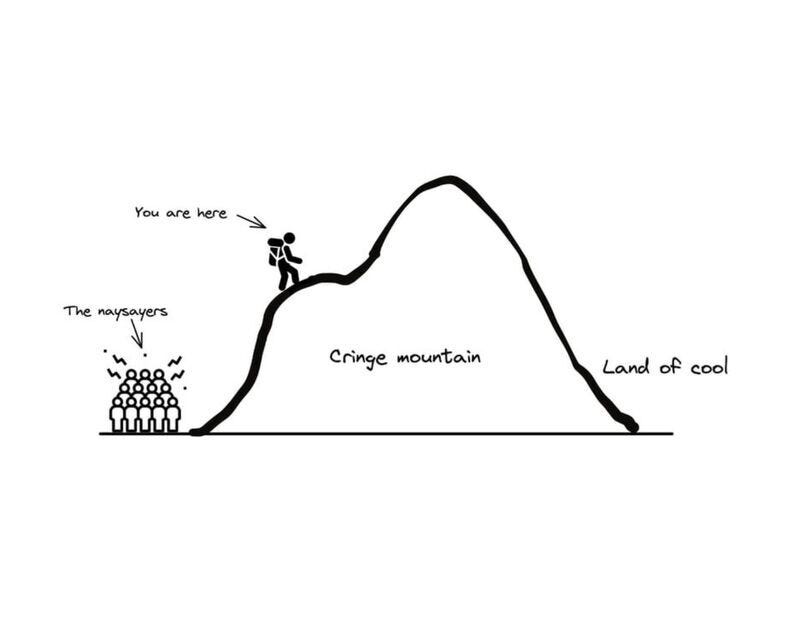
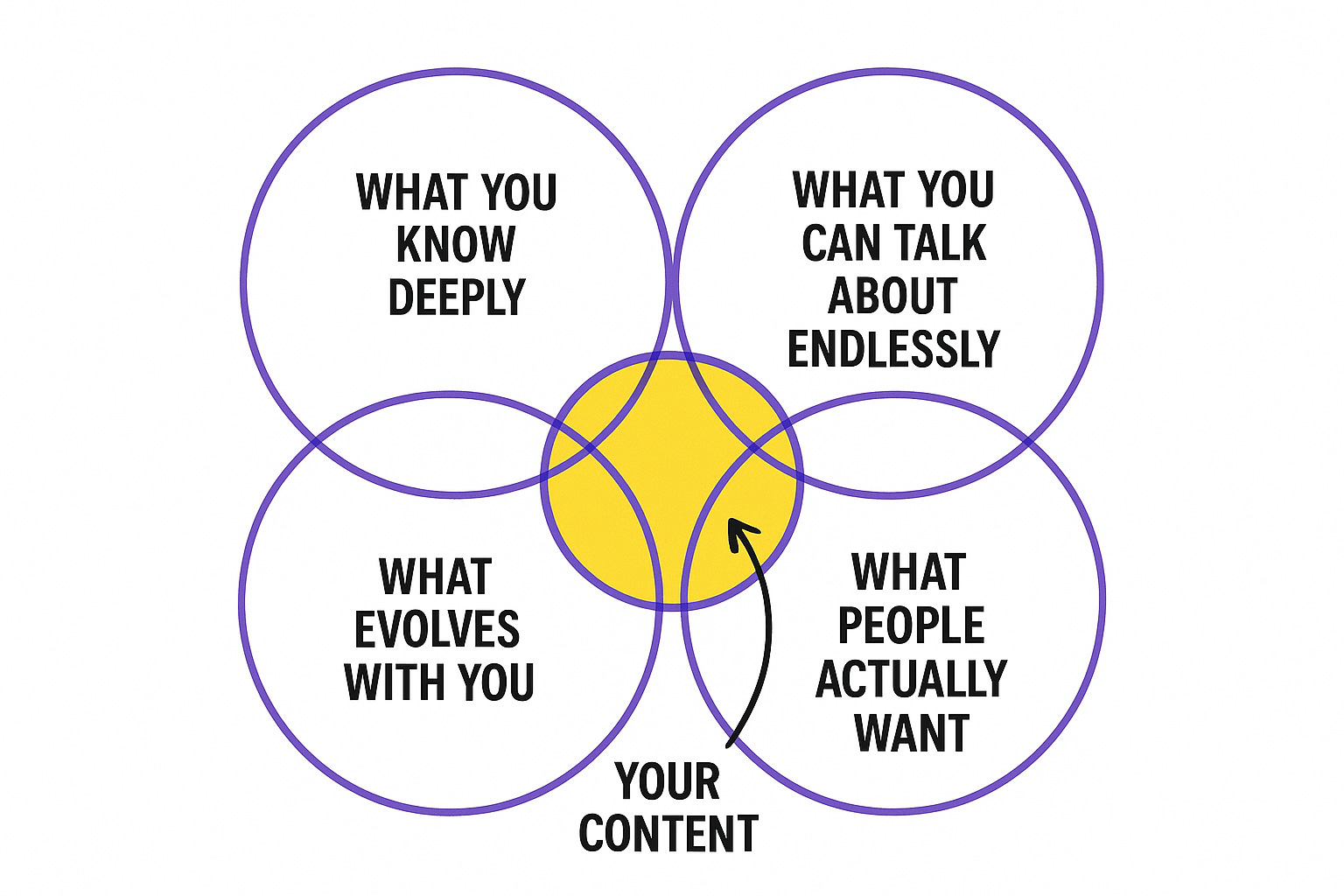
Once I realized that I needed to really put myself out there”, it helped me (eventually!) create a framework for content that I always use when explaining how to choose a niche.
Your idea should sit at the intersection of: 1) what you know deeply, 2) what you can talk about endlessly, 3) what people want, and 4) what evolves with you.
Treating content like product
My framework helped me brainstorm topics I knew about deeply and ones that would evolve with me, but I didn’t know what people wanted to hear from me or what I could talk about endlessly.
I was a Product Manager during my MBA, so I stopped guessing and started doing “user research” like any good Product Manager would do.
I offered free coffee chats on LinkedIn to anyone navigating career pivots. Thirty people booked in a week. Even months later, requests kept coming in from people who’d just discovered the post.
From those calls, I learned:
Who my “audience” was: Ambitious professionals in their 20s and 30s, often leaving consulting or finance without a clear path on what to do next, frequently struggling with redefining success on their own terms
What they wanted: Personal stories, tactical advice, guidance, and tough love from someone who’d been in their shoes before
What they couldn’t get from existing sources: Career coaches and run-of-the-mill career content creators weren’t able to talk about why they chose to get an MBA (or not get one), whether to work at a Series A or C startup, how to manage finances as a high earner…
I logged every question in Notion. Patterns turned into themes, and themes became my first content pillars.
That process taught me the simplest truth about side hustles: distribution is the cheapest prototype. You don’t need a product to start; you need an audience to learn from. The products and services will come!
Resource for thinking like a product manager!
Inspired: How to Create Tech Products Customers Love by Marty Cagan
Taking the first step
I chose one platform to start: Instagram.
In hindsight, LinkedIn would’ve been “easier” to start with just text posts. And I did try posting there… for about three posts. Then I quit. I hadn’t yet learned to climb cringe mountain — that uncomfortable phase of feeling like you’re shouting into the void while people you know in real life (coworkers, old classmates, your manager) can see every word.
Instagram felt less daunting (though I know others have differing views!). I started posting short reflections from my career — answering questions from those early conversations.
Resources for Getting Started
If you’re stuck between “no ideas” and “too many,” here are a few ways to move forward:
ChatGPT prompt to brainstorm your side hustle using my framework:
I want to brainstorm side-hustle or solopreneur ideas that sit at the intersection of four things:
1️⃣ What I know deeply (my skills, experiences, and domain knowledge)
2️⃣ What I can talk about endlessly (topics I enjoy thinking and writing about)
3️⃣ What evolves with me (things I’d still be curious about in 5 years)
4️⃣ What people actually want (problems others are willing to pay for or need solved)Ask me clarifying questions to help define each circle. Then, generate 5–7 side-hustle ideas that combine these elements.
For each idea, include:
Core problem it solves
Audience it serves
Why I might be uniquely credible to solve it
Possible formats or distribution channels (e.g. product, content, service, or community)
End with a short summary: which 1–2 ideas have the strongest overlap across all four circles and why.
Start with an audience/customers you already know/like — dog owners, baristas, retirees, whoever you genuinely like helping. Talk to them and ask them about problems you can solve. Start to notice patterns and themes emerge.
Startups for the Rest of Us podcast, if you’re building more of a software/product.
Greg Isenberg shares great content to help you brainstorm business ideas
But actually…what should I post?
Once you’ve picked your topic, the next question is: what do I post about every week without running out of ideas?
Here’s my cheat sheet:
People always care about being hot, rich, and happy. Everything online ties back to health, money, or fulfillment. Even niche topics connect to one of those three - help people feel smarter, wealthier, more confident, or calmer.
Educational is good. Entertainment is good. Doing both is gold. I lean too educational, but the best creators teach and entertain - stories, humor, visuals, quick hooks. Keep people awake while you teach.
Critique creators in your niche - don’t copy them. Copy outside your niche. Steal formats from other spaces and remix them. Fashion creators, YouTubers, lifestyle vloggers - borrow pacing, structure, or tone, then repurpose it your own way.
Part 2: 10 Principles for Starting a Distribution-Led Business
I don’t believe in a single playbook. What works changes fast, but the principles stay consistent. These are mine for when you’re starting out.
1. Quantity leads to quality
In the beginning, I overplanned everything. I’d write and rewrite scripts, color-code content calendars… and then barely post. The irony is that the pieces I spent the most time polishing rarely landed.
What actually worked was volume. Getting enough reps to see what clicked — what people responded to, and why. You can’t find your “quality” until you’ve produced enough to notice patterns.
If you’re just starting, aim for volume (depending on the platform you pick: 4-5 posts a week on Instagram, daily on TikTok, 3x a week on LinkedIn, 1x a week on Youtube). It sounds like a lot, but the repetition is the point. Every post is a data point. You’ll find your rhythm faster by creating in public than by planning in private.
2. Do things that don’t scale
Everyone wants to outsource early, especially if you’re juggling a full-time job. I get it. I do delegate now, but in the beginning, you can’t.
You need to be close to your content: editing your own videos, replying to comments, watching what performs, DM’ing other creators. That’s how you develop taste and instincts, which you can’t delegate.
Later, when you do hire help, you’ll actually know what “good” looks like because you’ve touched every part of the process yourself.
3. One channel at a time
I started with just Instagram. For months, that was it. I wanted to understand one platform deeply - what resonated, what didn’t, how the algorithm behaved - before adding anything else.
Once I found my rhythm there, I slowly expanded to LinkedIn and TikTok. Each platform has its own culture, pacing, and unwritten rules. What performs well on one can completely flop on another. (For example, I couldn’t make Youtube sustainable because it didn’t fit my communication style…but never say never!)
Some people start long-form and repurpose to short-form. Others go the opposite way. There’s no single right order — just make sure you’ve mastered one before spreading yourself thin across five.
4. Build with your community
It’s easy to think being a creator is about algorithms and content calendars. But the truth is, it’s people who keep you going.
Some of my biggest idea and supporters came from creator friends - someone invited me to my first podcast, someone else shared their editor, another helped me navigate a brand deal. Even now, I text them to gut-check opportunities or brainstorm ideas.
If you’re just starting, focus on building with your audience and peers. Support other creators. Comment on their work, share resources, collaborate. The creator world, especially in career and tech, is smaller (and kinder) than it looks.
5. Create systems — but don’t overdo it
If you’re creating after work, structure is key. You’ll need a basic setup:
a Notion or spreadsheet content tracker
time blocks after work or on weekends
processes (or even GPTs) for brainstorming, drafting, and admin
But the key is balance. You don’t need a 20 tab Notion database. Systems should make creating easier, not become the work themselves.
I’ve experimented with a bunch of setups - some stuck (a simple Notion content calendar, a GPT for responding to brand outreach), most didn’t (GPTs for writing scripts). The goal isn’t to be perfectly organized; it’s to stay consistent when the novelty wears off.
6. Monetize — but not too early
When my first brand deal came in, I was initially thrilled… and then I turned it down. I didn’t want my content decisions driven by sponsorships before I even knew what my audience cared about.
That said, don’t wait forever either. Listen to feedback - people will tell you what they want from you (e.g. courses, coaching). If you consistently provide value and partner with brands that you love, you won’t be a “sellout,” even if you might feel like one.
The way I think about monetization is through this framework (I read these somewhere and pieced them together in my Notion content doc - let me know if you find the original source!)
4C: Courses, Consulting, Coaching, Community
1D: Digital products (templates, checklists, guides)
B: Brand deals and sponsorships (including UGC)
P: Platform monetization (YouTube ads, IG Reels, TikTok Shop, etc.)
What you prioritize depends on your content, platform, and audience. My best advice is to test different avenues and see what feels right. I’m still learning about monetization as well and it’s always a delicate balance.
7. Balancing content with a full-time job
Real talk - it’s easier to do this when you have a remote or predictable job. If you’re in consulting or a fast-paced startup or anything with 60+ hour weeks, you’ll have to carve out time and energy very intentionally.
Start by checking your company’s external comms policy. Most allow personal content as long as you’re not speaking on behalf of your employer or using work hours. I personally take the “ask forgiveness, not permission” approach (within reason).
Then build a routine around your energy, not just your calendar. I jot down ideas during the week, batch create content on weekends, and schedule a few posts a week, with heavy repurposing. You’ll find your rhythm, but you may also need to accept that you’ll grow slower vs. someone doing content full-time.
8. Mindset really matters
I used to roll my eyes at “mindset talk.” I’m practical, not woo-woo. But when you’re a creator, you are the product - and your mindset is the foundation for your content.
There will be weeks where nothing hits. You’ll compare yourself to others. You’ll question whether it’s worth it. I still do.
The key is to build a process you can sustain even when you’re unmotivated. And to have a life outside of content - hobbies, people, job - so your self-worth doesn’t hinge on analytics. (It’s harder than it sounds.)
That’s one underrated perk of being a side-hustler: your content doesn’t have to carry the full weight of your identity or income. It can be lighter, more creative, more fun.
9. Scale (when you’re ready)
Eventually, you’ll hit a point where you’re both the product and the bottleneck. That’s when it’s time to delegate.
For me, the signal was when I started dreading the admin - editing, brand outreach, content scheduling. I realized I wanted to spend more time writing and brainstorming and connecting with people, not formatting reels.
Start small: an editor, a part-time manager, or automation tools. Hire for what drains you and hire right.
10. Keep a beginner’s mind
When you’re new, you try things without overthinking - and ironically, that’s often when your content performs best. Over time, you develop better instincts and create faster, but you also become more perfectionist and rigid. You second guess yourself and overthink, resulting in worse content.
I’ve gone through that cycle more than once. The antidote is to stay curious: experiment, take risks, chase ideas before they get warped.
Working at a startup helps me keep that mindset - you’re always testing, iterating, learning. When I have an idea I feel *really* good about, I try to just post it instead of filing it away for later.
If you’re growing on Instagram and want to hear the tactical side of how I grew to 50K followers in ~1 month, I made a video about it (before I stopped posting on Youtube!)
Part 3: How I’d Start a Content Side Hustle in 2025
If I had to restart from zero, this is exactly what I’d do:
Step 1: Define your idea
Start with what people already come to you for advice on. That’s your first clue. It’s usually something so obvious to you that you overlook it.
The goal isn’t to be the most original voice on the internet. It’s to bring your experience and perspective to a topic people already care about. Relevance beats novelty every time.
Ask yourself:
What do people ask me about repeatedly?
What could I talk about for hours without getting bored? (and a topic that will evolve as I do?)
What have I actually done that others want to learn?
You don’t need to niche down perfectly on day one (or ever, tbh) - you just need a clear enough hypothesis to test.
Step 2: Test fast
Don’t overthink it. I started with an iPhone note of ideas (that quickly became a Notion content calendar) and an AI-generated profile picture (that I still use).
Post quick drafts. Talk to five people in your target audience. Look for patterns in what gets comments or follow-up questions. Put in the work when things compound - after I went viral, I spent the next few weekends creating more content and free resources so I wouldn’t lose the momentum and could keep providing value.
If something resonates, make more of it. If it flops, move on. Every post is a small experiment. Your first 30 pieces of content are for you to figure out what works.
Step 3: Focus on distribution first
An audience is leverage, even if your goal with content is to sell a product. Content is feedback, proof, and your first distribution channel for anything you eventually sell.
Pick 1 platform where your people already hang out and show up consistently. For me, it was Instagram. Once I saw traction, I layered on LinkedIn (that’s a whole other story because it took me a long time to grow there!).
When you find what performs, repurpose it everywhere else. A single good idea can live different lives across platforms. (I’m still learning how best to do this too)
Step 4: Think long-term
Set up lightweight systems early:
A Notion or spreadsheet tracker
A weekly time block for creating
A recurring reminder to review what performed
Expect slow months. Expect plateaus. That’s part of the process. You’re not just creating content - you’re building an engine that compounds.
What about the money?
And yes, I didn’t talk much about the money part - brand deals, products, or coaching. That’s intentional. Most of my revenue comes from brand deals, and I’ve tested digital products and coaching too, but what works looks different for every creator.
The common thread is that content is the engine. If you’re just starting, planning out all the ways to monetize isn’t helpful because it’s not rooted in listening to your audience. Build distribution first - everything else flows from that. Almost all my opportunities have come inbound. (Let me know if you want me to break down monetization in a future post.)
I hope this helps - whether you’re trying to build a side business or a personal brand that grows your full-time career! Subscribe for more long posts like this, and here if you ever want to talk through building your personal brand.
Absolutely love this Hannah! Inspiring me to take my content more seriously and put myself out there :)
This post is super helpful, Hannah. Especially the ChatGPT prompt. Thinking through the answers to the questions it asked me has been a valuable exercise. Thanks for sharing it.